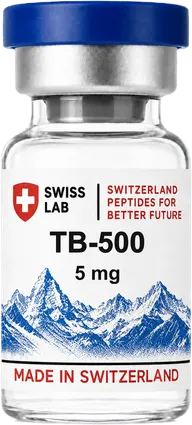
TB-500 is a synthetic peptide that corresponds to the actin-binding region of Thymosin β4 (Tβ4) — a small, naturally occurring peptide that is among the most abundant actin-regulating molecules inside cells. Because Tβ4 recurs throughout the cytoskeletal and tissue-repair research literature, the fragment supplied as TB-500 draws the same research interest.
This overview summarises how TB-500 and Thymosin β4 are described in peer-reviewed laboratory and animal-model studies, for orientation within the research community. It does not describe human use, therapeutic effects, recovery, dosing, or any outcome in people, and nothing here should be read as guidance for use in humans or animals.
- TB-500 is a synthetic peptide corresponding to the actin-binding sequence of Thymosin β4 (Tβ4).
- Tβ4 is a naturally occurring peptide and one of the main actin-sequestering molecules in cells.
- It is studied mainly in cytoskeletal, cell-migration, angiogenesis and tissue-repair research models.
- The observations are mechanistic and preclinical — they are not demonstrated effects in humans.
- It is supplied for laboratory research use only and is not approved for human or veterinary use.
What TB-500 is
Thymosin β4 is a 43-amino-acid peptide found in many tissues and body fluids. Its best-characterised role in cell biology is binding monomeric (G-)actin, which makes it a key regulator of the actin cytoskeleton. TB-500 refers to a synthetic peptide based on the short actin-binding region within Tβ4 rather than the full-length peptide. In practice the two names are often used loosely, as if interchangeable, but it is more accurate to describe TB-500 as corresponding to the actin-binding portion of Tβ4 — a distinction worth keeping in mind when reading supplier material, which frequently blurs it.
The actin-binding activity is carried by a short conserved motif within the Tβ4 sequence, and it is this region that gives both the parent peptide and the synthetic fragment their defining property in laboratory models: the ability to bind and sequester actin monomers.
Mechanisms studied
In the published literature, the peptide is examined mainly through its interaction with actin — the protein that forms much of the internal scaffolding of a cell. By binding monomeric actin, Tβ4 influences the balance between free actin subunits and assembled filaments, and this cytoskeletal role is the starting point for most of the mechanisms studied. The following are recurring themes in laboratory and animal-model work, not effects shown in people:
| Mechanism studied (lab/animal models) | What is observed | Research context |
|---|---|---|
| Actin sequestration | Binds monomeric (G-)actin and influences polymerisation dynamics | Cytoskeletal cell-biology models |
| Cell migration | Associated with changes in cell motility and movement | In-vitro migration assays |
| Angiogenesis | Examined in endothelial-cell migration and vessel-formation models | Preclinical vascular models |
| Tissue-repair models | Appears in animal injury and remodelling studies | Preclinical, non-human |
Each row describes what researchers measure in a controlled model, not a claimed result in humans. The mechanistic layer — how the peptide behaves at the level of actin and cell movement — is the best-developed part of the literature.
Where it appears in research
Beyond core cell biology, Tβ4 and its actin-binding fragment turn up across several preclinical research areas: dermal and wound-repair models, corneal and eye-injury models, cardiac and vascular injury models, and neurological injury models. It is also frequently discussed alongside BPC-157, another peptide studied in overlapping tissue-repair research contexts; the two are often compared, though they are structurally unrelated. Appearing in these models is what drives the interest — but appearing in a research model is not the same as a demonstrated outcome, a distinction the next section makes explicit.
What the evidence does not establish
As with most research peptides, the honest summary is that the mechanistic and laboratory work is the well-developed part, and little can be claimed beyond it. The literature does not establish:
- Any therapeutic effect, healing, or recovery in humans — the research is mechanistic and largely preclinical.
- That findings in cell cultures or animal models scale to people — this remains unknown.
- Any outcome from a particular preparation, concentration, or protocol — these are outside the scope of the mechanism research.
- Human dosing, routes of administration, or safety — none of these are established.
If you are sourcing TB-500 for laboratory research, the references below point to the primary literature on Thymosin β4, and the product page lists the analytical documentation available.
Frequently asked questions
- Is TB-500 the same as Thymosin β4?
- Not exactly. TB-500 is a synthetic peptide corresponding to the actin-binding region of Thymosin β4, not the full-length natural peptide. The names are often used interchangeably in supplier material, but the literature distinguishes the fragment from the parent peptide.
- What does TB-500 do in laboratory models?
- Its defining property in the literature is binding monomeric actin, which places it in cytoskeletal, cell-migration and tissue-repair research models. These are mechanistic observations in the lab, not demonstrated effects in humans.
- Is TB-500 related to BPC-157?
- They are structurally unrelated but are often discussed together because both appear in overlapping tissue-repair research contexts. Any comparison is at the level of research models, not human outcomes.
- Is TB-500 approved for human or veterinary use?
- No. It is an unapproved compound supplied for laboratory research use only, and is not a medicine, food, or supplement.
- Can I use TB-500 for recovery or injuries?
- No. It is supplied for laboratory research use only and is not for human or veterinary use. The research describes mechanisms in laboratory and animal models and does not establish any effect in people.