Research peptides are usually supplied as a lyophilised (freeze-dried) powder, because they are far more stable that way during shipping and storage. Before they can be used in laboratory work, that powder has to be dissolved into a liquid — a step called reconstitution. Done carefully, it produces a clear research solution at a concentration you have calculated and recorded.
This guide describes the reconstitution procedure as a laboratory technique only — choosing a solvent, adding it correctly, and working out the resulting concentration. It does not describe any use of the resulting solution beyond laboratory research, and nothing here is guidance for use in humans or animals.
- Reconstitution dissolves a freeze-dried peptide into a solvent to make a research solution.
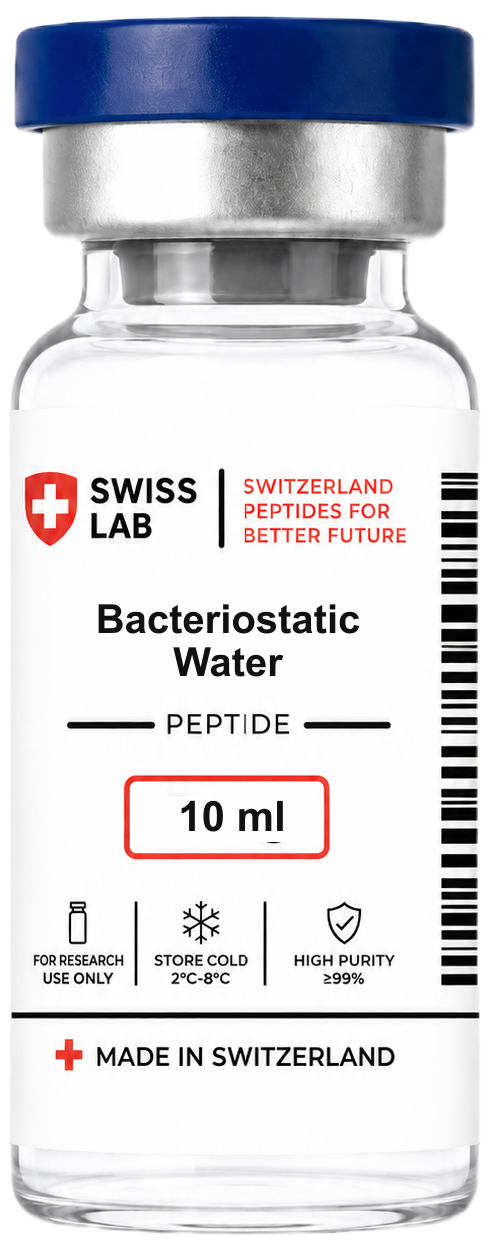
- The usual solvent for research handling is bacteriostatic or sterile water.
- Add the solvent slowly down the vial wall and swirl gently — never shake.
- Concentration = total peptide (mg) ÷ solvent added (mL). Record it.
What reconstitution means
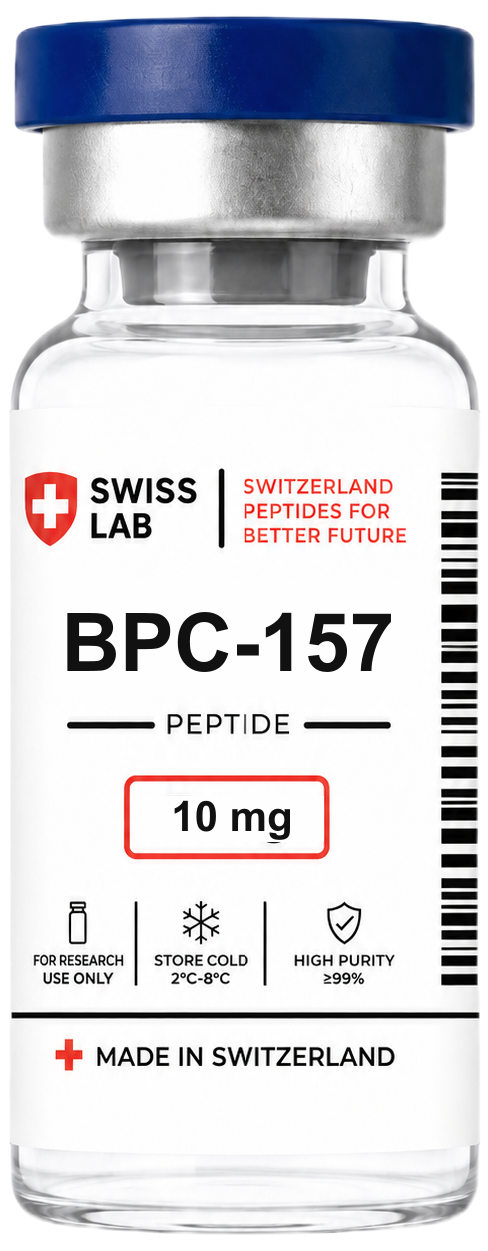
A lyophilised peptide is a solid pellet or film at the bottom of a sealed vial. Reconstitution simply means adding a measured volume of solvent so the peptide dissolves into solution. The amount of peptide in the vial does not change — you are only choosing how much liquid to dissolve it in, and that choice sets the final concentration.
What the procedure uses
Three things: the sealed peptide vial; a suitable solvent — bacteriostatic water (water with a small amount of benzyl alcohol, which keeps a multi-use vial stable) or sterile water for single use; and a clean measuring syringe to transfer an accurate volume of solvent. Work on a clean surface and wipe the vial stoppers with an alcohol swab first.
The basic steps
- Decide the solvent volume in advance — this sets your concentration (see the next section).
- Draw that volume of solvent into the measuring syringe.
- Insert the needle into the peptide vial and let the solvent run slowly down the inside wall of the glass — not directly onto the peptide pellet.
- Remove the syringe and swirl the vial gently, or let it stand, until the solution is completely clear. Do not shake it.
- If anything remains undissolved or the solution is cloudy, let it rest; gentle warming to room temperature can help.
Calculating the concentration
The concentration is just the amount of peptide divided by the volume of solvent you added. If a vial contains 10 mg of peptide and you add 2 mL of solvent, the solution is 10 ÷ 2 = 5 mg per mL. Add 1 mL instead and the same vial is 10 mg/mL; add 5 mL and it is 2 mg/mL. The peptide quantity is fixed by the vial — the solvent volume is what you control. Always label the vial with the concentration and the date.