Research peptides are sensitive molecules, and how they are stored is the single biggest factor in whether they stay intact for laboratory work. The good news is that the rules are simple and the same handful of conditions — temperature, moisture, light and freeze-thaw cycles — explain almost all degradation.
This guide covers storage and stability as a laboratory-handling topic only: how to keep dry and reconstituted peptides stable, and what causes them to break down. It does not describe any use of the material beyond laboratory research.
- Dry (lyophilised) peptide is the most stable form — keep it cold, dark and dry.
- Once reconstituted, a peptide is far less stable and belongs in the refrigerator.
- The main enemies are heat, moisture, light and repeated freeze-thaw cycles.
- Reconstitute only what you will use, and label every vial with the date.
Storing dry (lyophilised) peptide
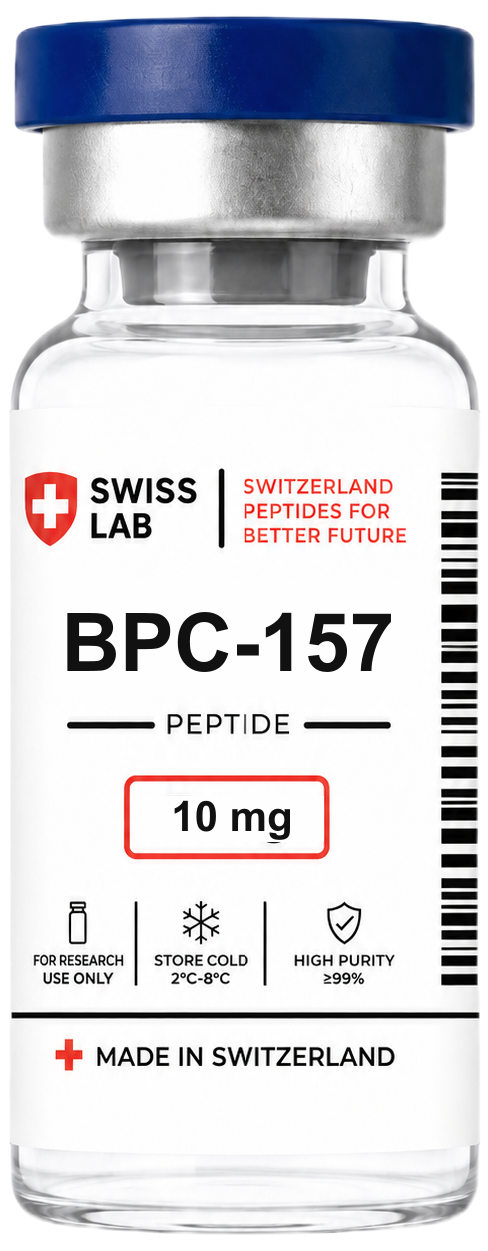
In its freeze-dried form a peptide is at its most stable, because there is no water for the chemical reactions that cause breakdown. Sealed lyophilised vials are best kept in a freezer (typically −20 °C or colder), away from light, and protected from moisture. Stored this way they remain stable for a long research-useful window — months, and often longer. Keep them frozen until the moment you need them.
Storing reconstituted peptide
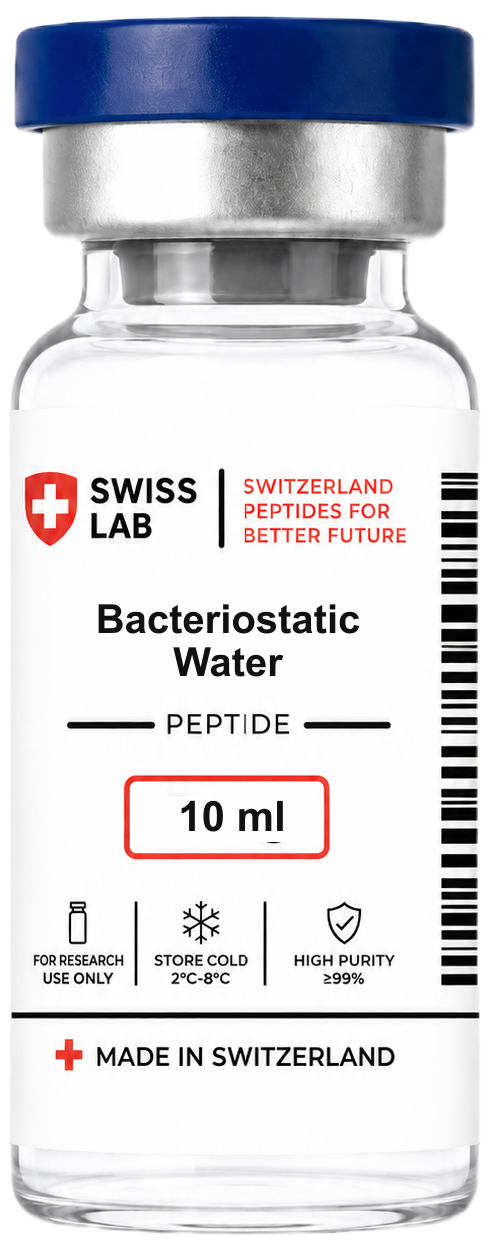
Once dissolved into a solution (see our note on reconstitution), a peptide loses much of that stability and should be refrigerated at roughly 2–8 °C, kept dark, and not repeatedly frozen and thawed. A solution prepared with bacteriostatic water generally holds for a few weeks under refrigeration; one made with plain sterile water has a shorter usable life. As a rule, dissolve only the amount you expect to use.
What degrades a peptide
- Heat — warmth accelerates the reactions that break peptides down; cold slows them.
- Moisture — water lets hydrolysis proceed, which is why dry storage is so much more stable.
- Light — some peptides are light-sensitive; amber vials or a dark drawer help.
- Repeated freeze-thaw — each cycle stresses the molecule, so a reconstituted solution is better kept refrigerated than frozen and re-thawed.
- Microbial contamination — a non-preserved solution can grow microbes; bacteriostatic water limits this.
Practical storage at a glance
| State | Recommended storage | Typical research window |
|---|---|---|
| Lyophilised, sealed | Freezer (−20 °C or colder), dark, dry | Months to longer |
| Lyophilised, short term | Refrigerator (2–8 °C) |