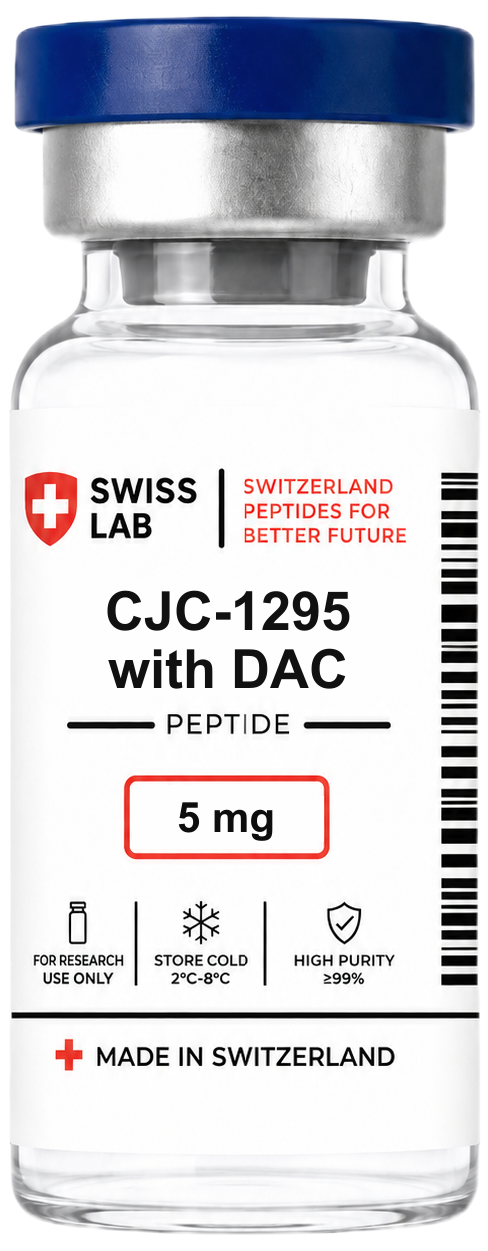
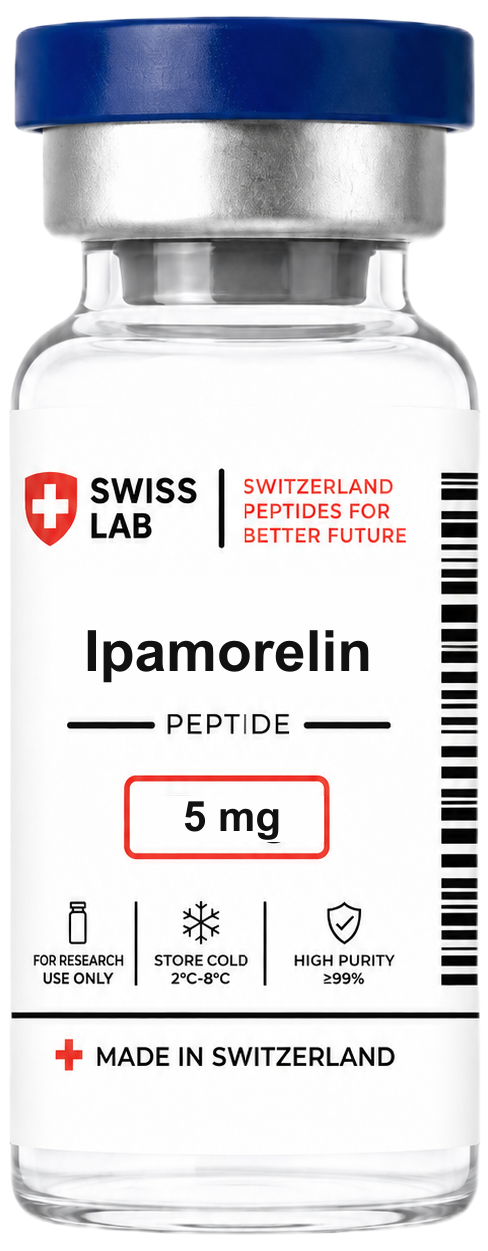
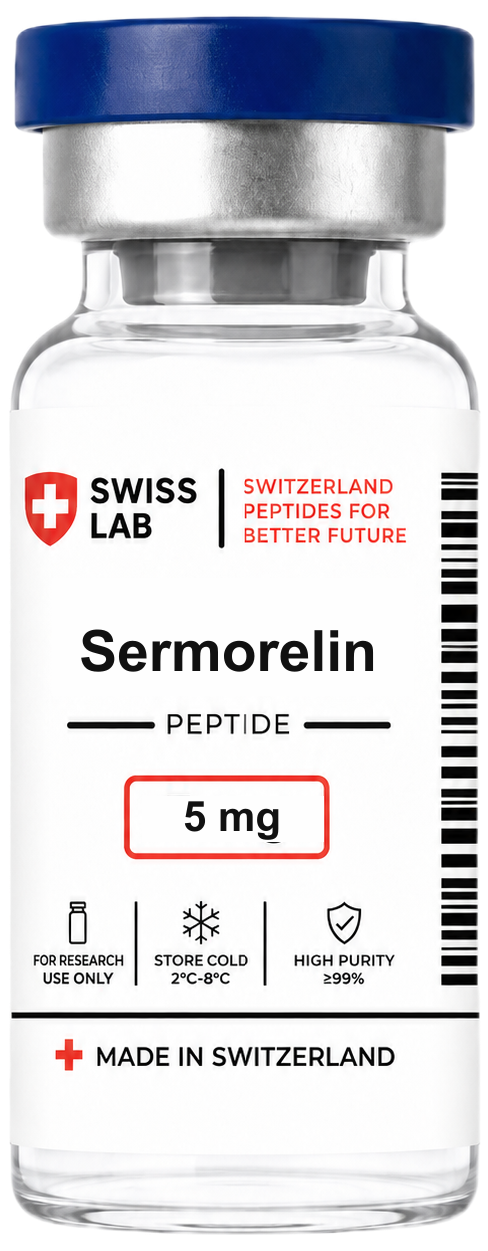
CJC-1295, ipamorelin and sermorelin appear together throughout growth-hormone-axis research, and are often grouped as if interchangeable. They are not. The clearest way to tell them apart is by which receptor they act on — and on that basis they fall into two distinct families.
This article summarises how the three are described in the peer-reviewed laboratory literature, at the level of receptor pharmacology, for orientation within the research community. It does not describe human use, dosing, or therapeutic effects, and nothing here should be read as guidance for use in humans.
- CJC-1295 and sermorelin are GHRH analogues — they act on the GHRH receptor.
- Ipamorelin is a growth-hormone-releasing peptide (GHRP) — it acts on the ghrelin/GHS receptor, a different target.
- Sermorelin corresponds to the GHRH(1-29) sequence; CJC-1295 is a longer-acting modified version of it.
- All three are supplied for laboratory research use only and are not approved for human or veterinary use.
Two families, two receptors
Growth-hormone secretagogues studied in the literature fall into two broad mechanistic groups. GHRH analogues mimic growth-hormone-releasing hormone and act on the GHRH receptor. GHRPs (growth-hormone-releasing peptides) act instead on the ghrelin receptor (GHS-R). The three compounds here split across that line — which is exactly why they are often studied in combination rather than as substitutes.
Sermorelin — the GHRH(1-29) analogue
Sermorelin corresponds to the first 29 amino acids of growth-hormone-releasing hormone — the active fragment, written GHRH(1-29). In the literature it is effectively the reference GHRH analogue and acts on the GHRH receptor. It is comparatively short-acting in research models. These are mechanistic observations, not demonstrated human outcomes.
CJC-1295 — the long-acting GHRH analogue
CJC-1295 is a modified version of that same GRF(1-29) sequence, engineered to last longer. It acts on the same GHRH receptor as sermorelin, so it belongs to the same family — the distinguishing research feature is its extended duration compared with the shorter-acting sermorelin.
Ipamorelin — the ghrelin-receptor agonist
Ipamorelin sits in the other family. It is a small synthetic peptide that acts on the ghrelin receptor (GHS-R), not the GHRH receptor — making it a GHRP rather than a GHRH analogue. In the literature it is noted for being relatively selective in research models. Because it works through a different receptor than the other two, it is frequently paired with a GHRH analogue in research designs rather than compared head-to-head.
The three compared
| Property | CJC-1295 |
|---|