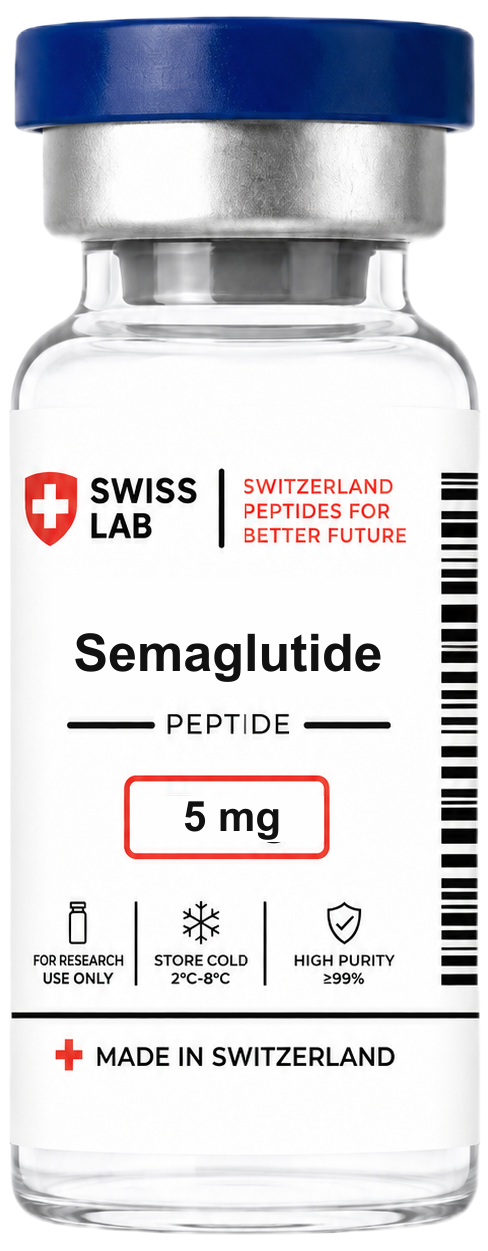
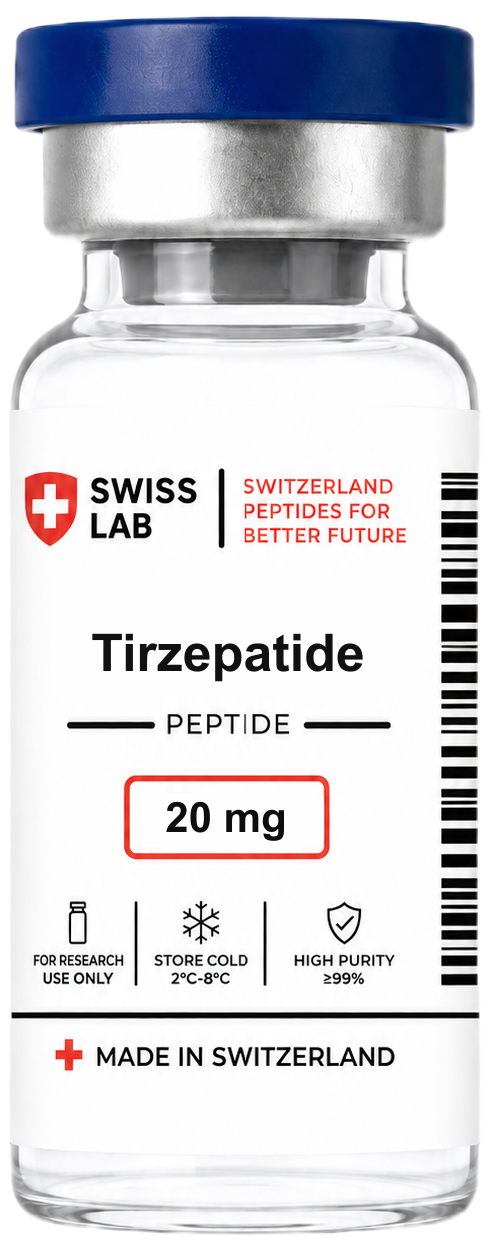
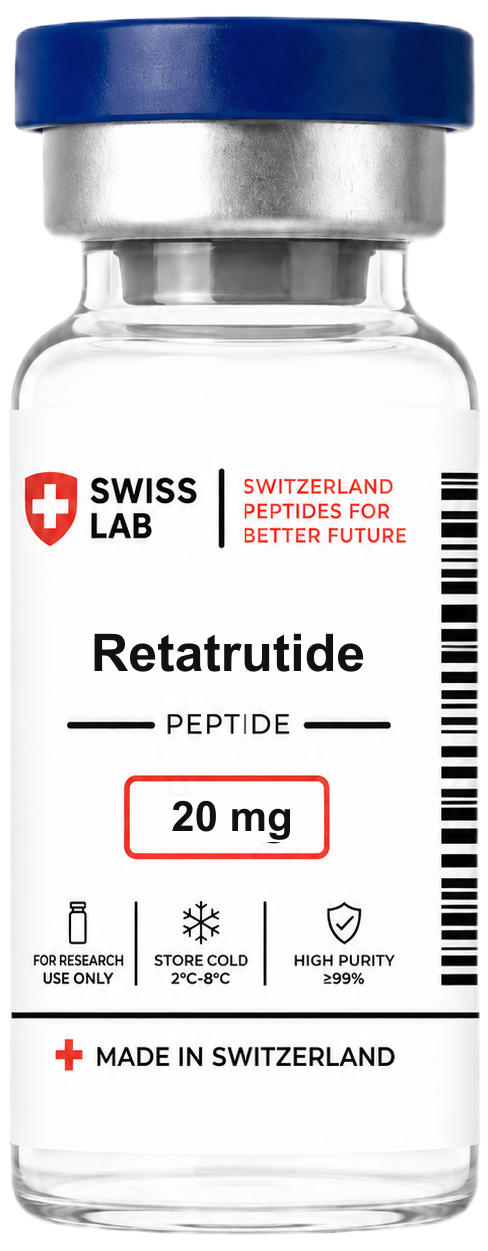
Semaglutide, tirzepatide and retatrutide are three synthetic peptides that recur together in metabolic and incretin research. They are often grouped as one category, but they differ in a defining way: how many receptor systems each one acts on. That single distinction — single, dual, or triple agonism — is the clearest way to tell them apart.
This article summarises how the three compounds are described in the peer-reviewed laboratory literature, at the level of receptor pharmacology, for orientation within the research community. It does not describe human use, dosing, or therapeutic effects, and nothing here should be read as guidance for use in humans.
- Semaglutide is a single agonist — it acts on the GLP-1 receptor.
- Tirzepatide is a dual agonist — it acts on both the GIP and GLP-1 receptors.
- Retatrutide is a triple agonist — it acts on the GLP-1, GIP and glucagon receptors, and is the newest and least-studied of the three.
- All three are supplied for laboratory research use only, are not approved for human or veterinary use, and are not medicines.
The receptors involved
These peptides are studied for their action on incretin receptor signalling — the pathways the body uses to respond to nutrient intake. Three receptors are relevant. GLP-1 (glucagon-like peptide-1) and GIP (glucose-dependent insulinotropic polypeptide) are incretin receptors studied in relation to glucose-dependent insulin secretion and gastric motility. The glucagon receptor is studied in relation to energy metabolism. Each compound below is defined by which of these receptors it activates.
Semaglutide — single (GLP-1) agonist
Semaglutide is a GLP-1 receptor agonist: in the literature it is the reference compound for studying GLP-1 receptor signalling. It acts on one receptor system, and because it is the most established of the three it has the largest body of published research behind it. These are mechanistic and laboratory observations, not demonstrated outcomes in humans.
Tirzepatide — dual (GIP/GLP-1) agonist
Tirzepatide acts on two receptors at once — both GIP and GLP-1 — which is why the literature often refers to dual-agonist or “twincretin” research. The research interest in tirzepatide centres on what engaging two incretin receptors together does, compared with a single-receptor agonist. As with semaglutide, the published work is laboratory and mechanistic in nature.
Retatrutide — triple (GLP-1/GIP/glucagon) agonist
Retatrutide adds a third target: in addition to GLP-1 and GIP, it acts on the glucagon receptor. It is studied as a triple agonist, and is the newest of the three compounds — so its body of published research is the smallest and least mature. Adding glucagon-receptor activity is the feature that distinguishes it in the literature.