The hypothalamic-pituitary-gonadal axis is a three-storey control system, and the compounds catalogued against it act on different storeys. Treating them as interchangeable — which almost every commercial description of them does — obscures the only thing that actually distinguishes them.
This note sets out what each molecule is, where on the axis it acts, and what its regulatory status actually is. All four have authorised medicinal counterparts, which makes the distinction between a licensed product and a research reagent unusually important here.
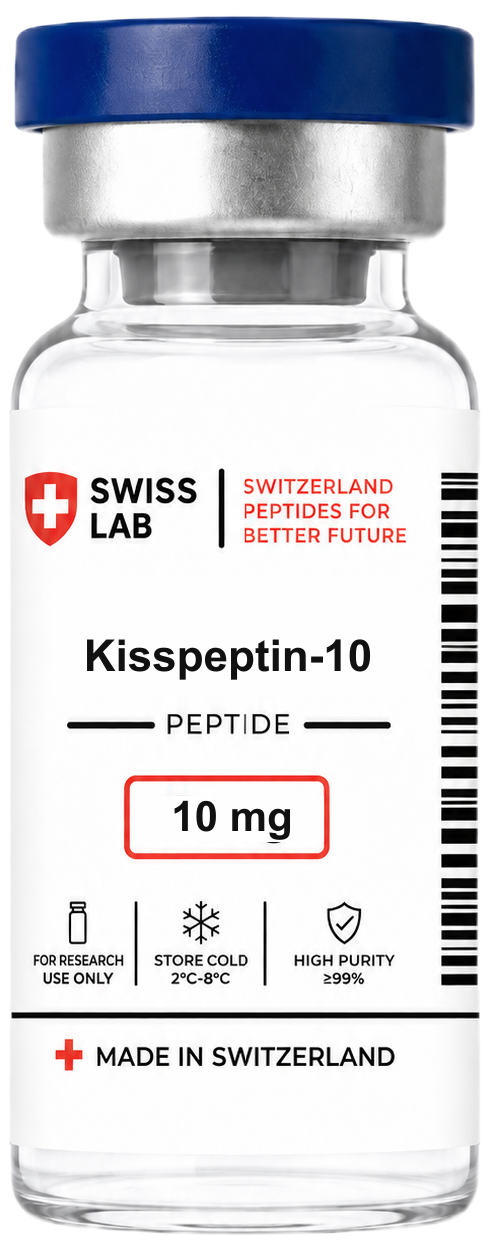
- Kisspeptin-10 acts upstream of GnRH release; decapeptide, CAS 374675-21-5, 1302.4 g/mol.
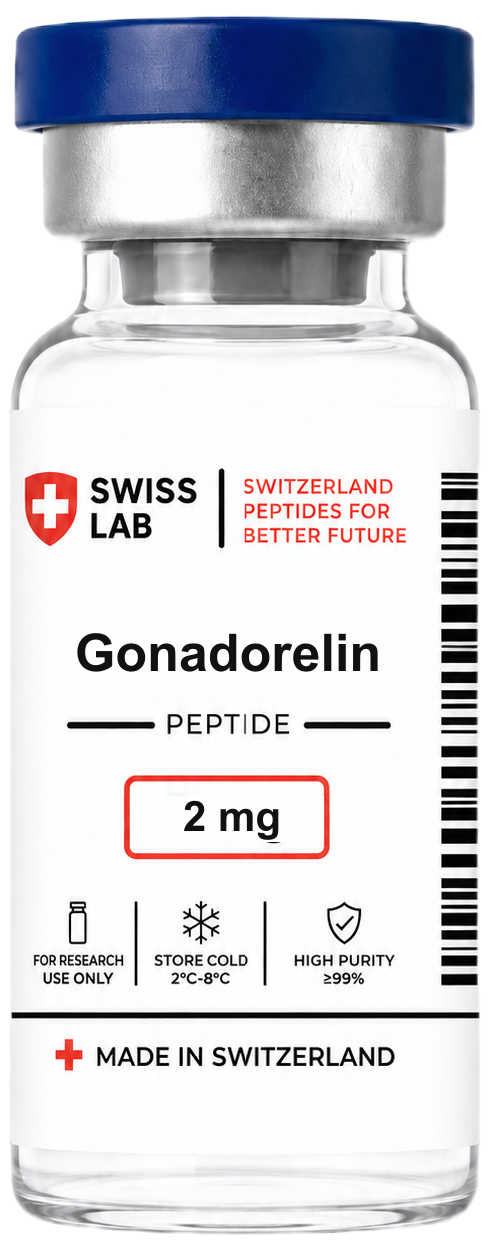
- Gonadorelin is GnRH itself; decapeptide, CAS 33515-09-2, 1182.3 g/mol.
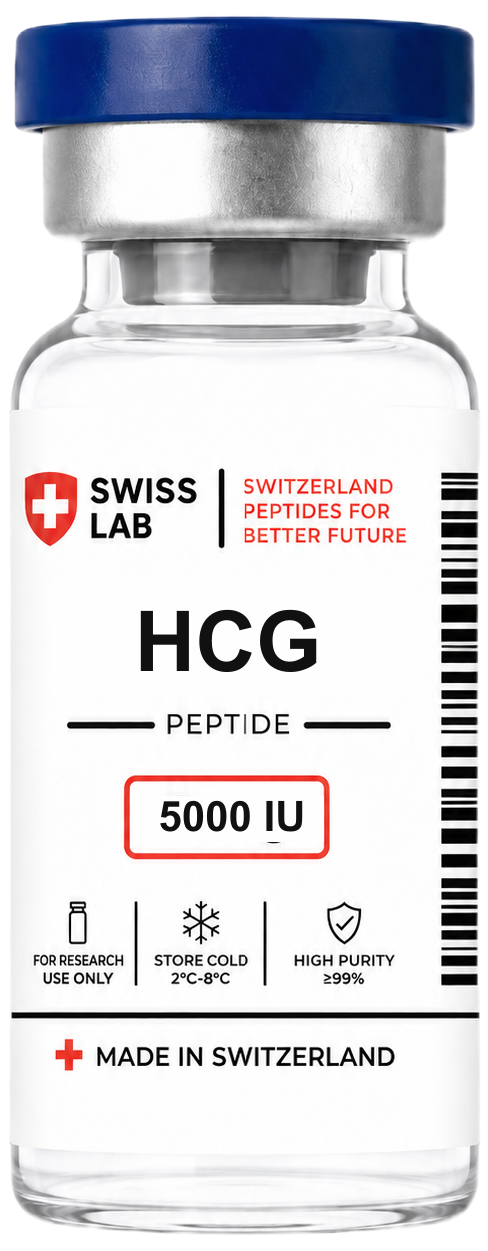
- HCG is a glycoprotein hormone acting at the gonadal level, not a peptide in the synthetic sense; CAS 9002-61-3.
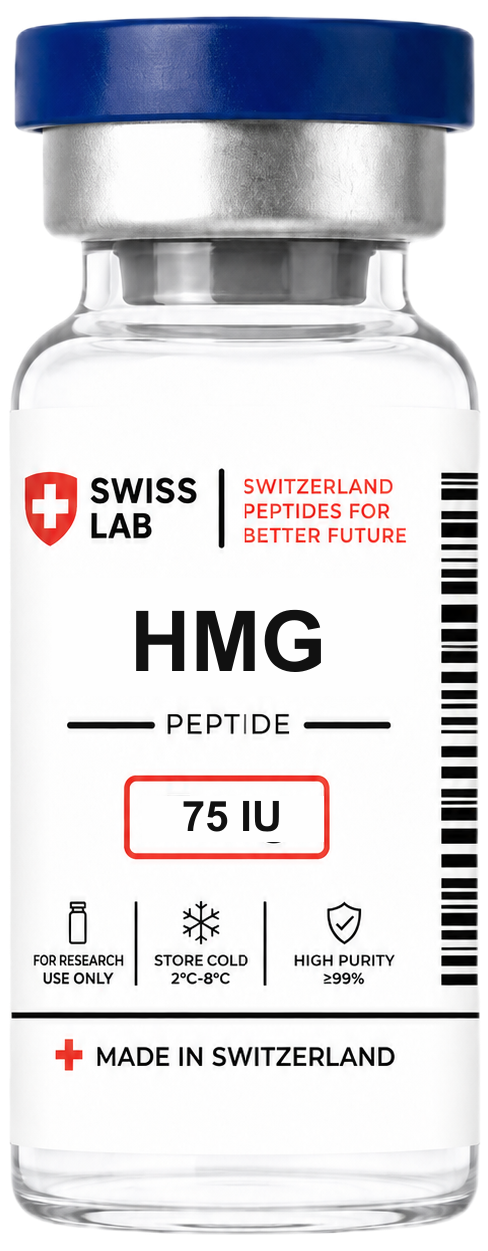
- HMG is not a single molecule at all — it is a urinary gonadotropin preparation with FSH and LH activity; CAS 9002-68-0.
- All four have authorised medicinal forms. Research-grade material is a different regulatory object and no pharmacy dispenses it.
Three storeys, four compounds
The hypothalamus releases gonadotropin-releasing hormone in pulses. GnRH acts on the anterior pituitary, which releases the gonadotropins — luteinising hormone and follicle-stimulating hormone. Those act on the gonads. Each storey has its own receptors, and a compound acting on one of them is not doing the same thing as a compound acting on another.
| Compound | Where it acts | What it is | CAS |
|---|---|---|---|
| Kisspeptin-10 | Upstream of GnRH neurons | Decapeptide, synthetic | 374675-21-5 |
| Gonadorelin | Pituitary GnRH receptor | Decapeptide — GnRH itself | 33515-09-2 |
| HCG | Gonadal LH/CG receptor | Glycoprotein hormone | 9002-61-3 |
| HMG | Gonadal, FSH and LH activity | Urinary gonadotropin preparation | 9002-68-0 |
Gonadorelin is GnRH
Gonadorelin is not an analogue of gonadotropin-releasing hormone; it is that hormone, synthesised. Its sequence is Pyr-His-Trp-Ser-Tyr-Gly-Leu-Arg-Pro-Gly-NH2 — a decapeptide with a pyroglutamate at the N-terminus and an amidated C-terminus, both of which matter for receptor recognition. Molecular formula C55H75N17O13, average molecular weight 1182.3 g/mol.
It is also known as LHRH, luteinising hormone-releasing hormone, which is a historical name from before the peptide was understood to govern both gonadotropins rather than one. Suppliers use the two names interchangeably; they describe the same molecule and the same CAS number.
Kisspeptin sits one storey above
Kisspeptin-10 is the decapeptide fragment corresponding to residues 45–54 of the metastin sequence: Tyr-Asn-Trp-Asn-Ser-Phe-Gly-Leu-Arg-Phe-NH2, C63H83N17O14, 1302.4 g/mol. It acts at the KISS1 receptor, and the research interest in it comes from its position in the control hierarchy: it is studied as a regulator of the neurons that release GnRH, rather than as something acting on the pituitary itself.
HCG and HMG are not peptides in the same sense
Human chorionic gonadotropin is a glycoprotein hormone: two subunits, extensively glycosylated, with a molecular mass around 36–38 kDa depending on the glycoform. It is not made by solid-phase peptide synthesis, it has no single unambiguous molecular formula, and it is characterised by bioassay potency in international units rather than by a mass figure. Its CAS number, 9002-61-3, is the registry entry for the hormone rather than for a defined small molecule.
HMG — human menopausal gonadotropin, also called menotropins — is a step further from a defined molecule again. It is a preparation purified from urinary gonadotropins, carrying both FSH and LH activity, standardised by potency. Asking for its molecular weight is a category error: it does not have one, because it is not one substance.
This has a practical consequence for anyone verifying material. For the two synthetic decapeptides, identity is a formula, a mass and a CAS number that either match a registry or do not. For the two gonadotropin preparations, identity is a potency assay and a batch record; a certificate reporting "HPLC purity 99%" for HMG is answering a question that does not apply to it.
All four are authorised medicines somewhere
Gonadorelin, HCG and HMG all have authorised medicinal forms, HMG most familiarly as Menopur and HCG as Pregnyl or Ovitrelle. That is worth saying plainly, because the usual commercial line — that none of this is a real medicine — is simply false for this group.
What follows from it is the same distinction that applies to every authorised molecule sold as a research reagent: the authorisation attaches to a finished pharmaceutical made under pharmaceutical quality systems, released against a registered specification, and dispensed on prescription for a defined indication. Research-grade material shares the molecule and none of the rest. No pharmacy dispenses it, it has no pharmacy price, and the existence of the licensed product says nothing about the reagent.
Verifying what arrived
- For gonadorelin and kisspeptin: check molecular formula, average molecular weight and CAS against an independent registry, then confirm identity by mass spectrometry. The two differ by roughly 120 g/mol and cannot be confused by MS.
- For HCG and HMG: a mass figure is not the relevant specification. Look for stated potency in international units and a batch record; a purity percentage alone does not characterise a glycoprotein or a urinary preparation.
- In all four cases the lot number on the vial must match the lot number on the certificate of analysis. A certificate that is not batch-specific documents nothing about the material in hand.
Frequently asked questions
- Is gonadorelin the same as GnRH?
- Yes. Gonadorelin is synthesised gonadotropin-releasing hormone itself, not an analogue of it — sequence Pyr-His-Trp-Ser-Tyr-Gly-Leu-Arg-Pro-Gly-NH2, CAS 33515-09-2. The older name LHRH refers to the same molecule, from a period before the peptide was understood to govern both gonadotropins.
- Why does HMG have no molecular weight?
- Because it is not a single substance. HMG is a gonadotropin preparation purified from urine, carrying both FSH and LH activity, and it is standardised by potency in international units rather than by mass. Asking for its molecular weight is a category error, and a supplier that quotes one is not describing the material accurately.
- These are approved fertility medicines — does that make the research material a medicine?
- No. The authorisation attaches to a finished pharmaceutical manufactured under pharmaceutical quality systems, released against a registered specification and dispensed on prescription for a defined indication. Research-grade material is the same active substance and none of those other things. No pharmacy dispenses it and it carries no pharmacy price.
- Can kisspeptin and gonadorelin be told apart analytically?
- Easily. Both are decapeptides, but kisspeptin-10 is 1302.4 g/mol against gonadorelin's 1182.3 — a difference of about 120 g/mol that mass spectrometry resolves without ambiguity. An HPLC purity figure alone would not distinguish them, which is why identity and purity are separate claims on a certificate of analysis.